
Eau Claire Criminal Records
Eau Claire criminal records can start with a police report, a municipal citation, or a county court file. That means a useful search begins with the office that created the record, then moves outward only if the first source is not enough. Eau Claire police can help with arrest records and incident reports. The municipal court handles city traffic and ordinance matters. Eau Claire County and Wisconsin state systems fill in the larger case trail when a city file does not answer the whole question. Start with the source that best matches the record you need.
Eau Claire Criminal Records at Police
The Eau Claire Police Department maintains arrest records and handles public records requests for incident reports. The department page at ci.eau-claire.wi.us/departments/police is the correct city source when the event began with a police response. That office can help you identify the report, the date, and the agency contact before you move to a county or state record search.
Police records are useful when the case is still a local event rather than a full court file. They can tell you who responded, what was reported, and whether the matter stayed at the police level or moved on. If you are trying to build a complete timeline, this is the first stop that usually gives you the facts you need to keep going.
For broader Wisconsin searches, use WORCS and the DOJ background check page at the Crime Information Bureau criminal history page. Those state tools are useful when a local report is only one piece of the record trail.
When a police report points to a case number, the search becomes much easier. Keep the request narrow. Give the date, the person, and the type of record you want. That makes it easier for staff to find the right file and helps you avoid a broad search that does not match the record.
Eau Claire Criminal Records Court
The Eau Claire Municipal Court handles traffic and ordinance violations for the city. The court page at ci.eau-claire.wi.us/departments/municipal-court is the right city office when the matter is a local citation rather than a county criminal charge. That distinction matters because a city court file is not the same as a county criminal case file.
Once a matter moves beyond city court, the county system becomes important. The Eau Claire County Clerk of Circuit Court is located at 721 Oxford Avenue, Eau Claire, WI 54703, and the county sheriff is also on Oxford Avenue. The county clerk handles criminal, civil, family, juvenile, probate, small claims, and traffic records, while the sheriff can help with incident reports, accident reports, and arrest records. The county courthouse is the natural backstop when the city case becomes a criminal case.
If you already know the docket number, use WCCA first. It can show the public side of the circuit court case and make the later copy request more precise. If the matter was appealed, WSCCA is the state appellate companion.
Eau Claire criminal records searches work best when you keep the city and county roles separate. City court handles city cases. County court handles criminal case files. Once that split is clear, the search path becomes easier to manage.
Eau Claire Criminal Records County
Eau Claire County is the next step when the city record is not enough. The county clerk at 721 Oxford Avenue keeps the formal court file, and the sheriff at the same address can help with jail and arrest-related information. That makes Eau Claire one of those places where the city and county trail are close together, but the records themselves still live in different offices.
County court records can tell you what happened after the local police report or municipal citation. If you need the criminal complaint, the judgment, or a docket line showing the next hearing, the clerk is the place to ask. If you need custody status or jail context, the sheriff is the better source. That split keeps the search focused and avoids asking the wrong desk for the wrong document.
WCCA is the bridge between those offices and the public. A quick case search can show the filing information you need before you request a paper copy. That saves time and helps when you only know a name or a rough date. For broader record checks, WORCS and the DOJ criminal history page can fill in the statewide side of the search.
County and state tools are especially useful when the city file is incomplete or the person moved through several offices. In Eau Claire, the best strategy is simple: police first, municipal court second, county clerk third, and state tools only when you still need more.
The Wisconsin Online Record Check System is the source for the state fallback image below and the broad Wisconsin criminal history path.
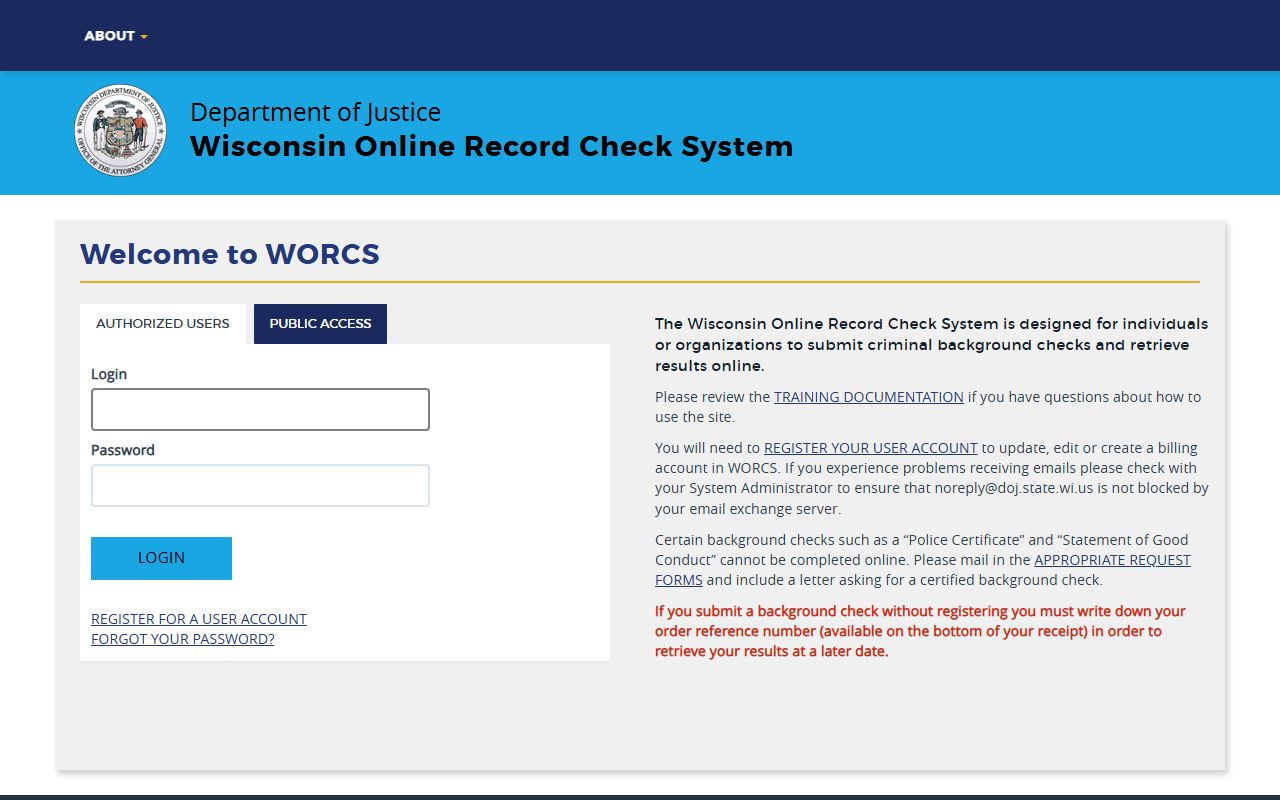
This state image is the approved fallback because no local Eau Claire image was available in the manifest.
Eau Claire Criminal Records Lookup
The Wisconsin Department of Corrections also adds context when a case has moved into supervision or custody. The public offender locator at appsdoc.wi.gov/public/offenders can help with supervision status, while the broader DOC public page at appsdoc.wi.gov/public supports other public access needs. Those systems do not replace the city or county file, but they do help complete the record trail.
Wisconsin public records law at Wis. Stat. 19.35 and the DOJ fee rule at Wis. Stat. 165.82 explain the access and fee side of many criminal records requests. If you need a wider legal backstop, the Office of Open Government at doj.state.wi.us/office-open-government is the place to start.
Eau Claire criminal records searches are strongest when you use the record source that actually created the file. That keeps the search local, accurate, and easier to finish.
The same rule applies if you need appeal material. Start with the circuit court case, then move to WSCCA only if the matter left the county court. That is the cleanest way to track a Wisconsin criminal record from the first report to the final public result.
If you only have a name, start broad and narrow later. A police report, a court docket, or a state history check can all point to the right next step, but each one answers a different question. Matching the tool to the question is what keeps the search efficient.
For Eau Claire users, that usually means the city police, the municipal court, the county clerk, and then the state resources if needed. That sequence is simple, but it is the most reliable path through the records.